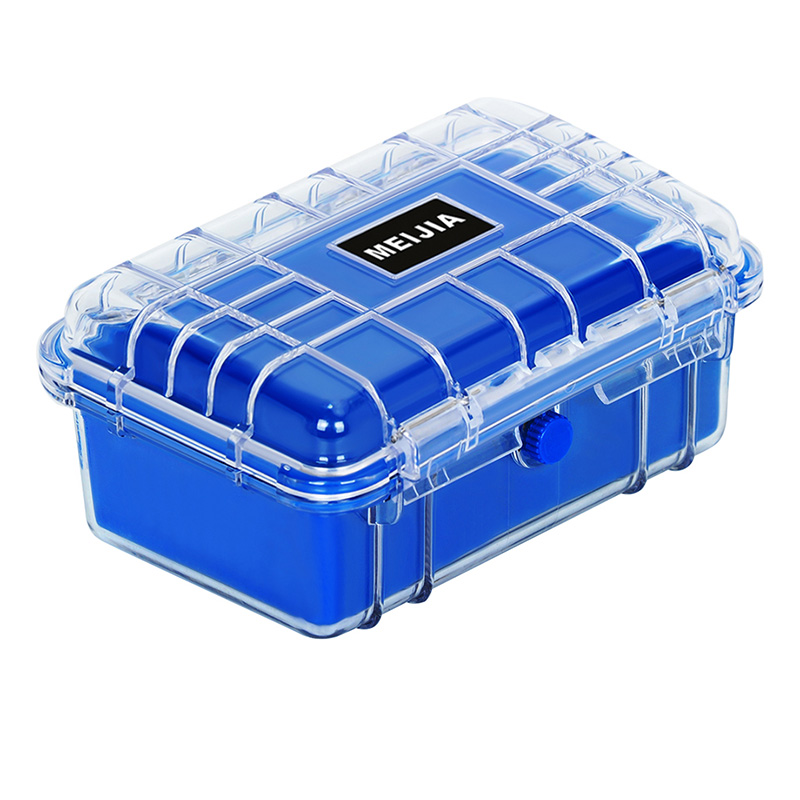
Abstract · This article provides a detailed technical examination of the Tool Gun Protective Hard Case, analyzing its material construction, protective capabilities, and engineering design. The discussion covers impact-resistant polymer shells, customizable foam interior systems, IP-rated environmental sealing, and the structural features that define professional-grade protective cases for sensitive equipment.
01. Material Architecture and Impact Resistance
The foundation of every Tool Gun Protective Hard Case lies in its shell material. Professional-grade protective cases are manufactured using high-impact polypropylene (PP) or advanced polymer composites that provide exceptional structural rigidity while maintaining manageable weight [citation:1][citation:4]. These materials are engineered to absorb and dissipate impact energy, protecting sensitive equipment from drops and shocks.
The material selection directly influences the case's performance under stress. High-impact polypropylene offers excellent resistance to abrasion, corrosion, and temperature extremes, making it suitable for demanding environments ranging from construction sites to fieldwork [citation:4][citation:6]. Some designs incorporate glass fiber reinforcement to further enhance tensile strength and impact resistance, achieving durability ratings that meet MIL-STD-810G military standards [citation:1][citation:6].
High-impact Polypropylene (PP) or reinforced composites
Glass fiber, Kevlar (Pro-grade)
3–6 mm typical; reinforced corners >8 mm
02. Interior Foam Systems and Customizable Protection
Pre-scored cubes allow user-created custom cavities for precise equipment fit [citation:1][citation:4].
Shock-absorbing, moisture-resistant material; ideal for long-term equipment protection [citation:5][citation:7].
Convoluted foam surface in the lid cushions items against vertical impacts [citation:4][citation:5].
Combines base foam for shape + top foam for pressure distribution [citation:1][citation:5].
The interior of a Tool Gun Protective Hard Case is as critical as its exterior. High-density EVA foam and customizable inserts ensure that tools and equipment remain immobile during transport, eliminating the risk of damage from internal movement [citation:5]. The pick-and-pluck system allows users to create tailored compartments, accommodating irregularly shaped items with precision [citation:1][citation:4].
Protection Principle: A well-designed foam system prevents equipment from shifting by providing zero-movement storage. This reduces the risk of scratches, impact damage, and mechanical stress during transport, outperforming soft-sided alternatives [citation:5].
03. Environmental Sealing and IP Waterproof Ratings
Environmental protection is a defining characteristic of professional-grade protective cases. The Tool Gun Protective Hard Case is engineered with precision seals and gaskets to achieve Ingress Protection (IP) ratings that guard against water, dust, and debris [citation:1][citation:4][citation:6].
| IP Rating | Water Resistance Level | Dust Protection |
|---|---|---|
| IP65 | Protected against low-pressure water jets | Dust-tight |
| IP66 | Protected against powerful water jets | Dust-tight |
| IP67 | Immersion up to 1 meter for 30 minutes [citation:1][citation:4][citation:6] | Dust-tight |
| IP68 (Pro) | Immersion beyond 1 meter for extended periods [citation:1][citation:6] | Dust-tight |
| IP69 (Pro) | Protected against high-pressure water jets [citation:1] | Dust-tight |
The sealing system typically includes a perimeter gasket made from silicone or rubber, coupled with secure latches that compress the seal when closed [citation:6]. This design ensures that cases maintain their protective integrity even in rain, snow, or dusty environments [citation:4]. For applications requiring submersion protection, IP67-rated cases are the industry standard [citation:1][citation:4].
04. Closure Mechanisms and Security Features
Secure closure is essential for maintaining the protective seal and preventing unauthorized access. Professional cases employ a range of latching systems, each designed to provide reliable closure under demanding conditions [citation:1][citation:6][citation:9].
- PowerClaw Latches: Engineered to maintain a tight seal even under pressure; features reinforced stainless steel hardware for long-term durability [citation:9].
- Multiple Latch Configurations: Standard designs include 2–4 latches that distribute clamping force evenly across the case perimeter [citation:4][citation:6].
- Padlock Compatibility: Reinforced eyelets support the addition of padlocks for physical security [citation:9].
- Biometric Options (Pro): Advanced models incorporate biometric or dual-lock systems for high-security applications [citation:6].
Security Note: For transportation in public spaces or high-risk environments, models with TSA-approved locking mechanisms are available, allowing security inspection without damage to the lock [citation:9].
05. Portability Design and Transport Ergonomics
A protective case is only effective if it can be transported conveniently. Modern designs integrate ergonomic features that enhance usability in professional workflows [citation:6][citation:9].
- Ergonomic Handles: Soft-grip handles reduce hand fatigue during extended carry; spring-loaded designs retract when not in use [citation:9].
- Wheel and Trolley Systems: Heavy-duty polyurethane wheels and telescoping handles enable easy transport of heavier loads [citation:6][citation:9].
- Shoulder Strap Options: Removable shoulder straps provide alternative carrying configurations [citation:4].
- Stackable Design: Square, flat profiles allow efficient stacking for storage and transport [citation:1].
The weight of a protective case must be balanced against its protective capabilities. Typical cases range from 2.5 kg for smaller units to over 8 kg for larger designs, with advanced materials enabling lightweight construction without compromising durability [citation:1][citation:6]. The integration of wheels is often specified for cases exceeding 5 kg to maintain user comfort [citation:6][citation:9].
06. Quality Standards and Testing Protocols
Professional protective cases are subject to rigorous testing and certification to ensure they meet the demands of their intended applications. Key standards include:
- MIL-STD-810G / 810H: Military standard for environmental testing, covering shock, vibration, and temperature extremes [citation:1][citation:6].
- IP (Ingress Protection) Ratings: Establishes water and dust resistance levels, with IP67 being the common benchmark for professional cases [citation:1][citation:4].
- EPR Certification: Environmental compliance for packaging materials in EU markets, ensuring sustainability requirements are met [citation:1][citation:5].
- ISO 9001:2015: Quality management system certification for manufacturing processes [citation:1][citation:5].
Testing Protocol: Cases that meet MIL-STD-810G standards are subjected to drop tests from 1.2–1.5 meters onto concrete surfaces, temperature cycling from -30°C to 65°C, and vibration testing to simulate transport conditions [citation:1][citation:6].
Frequently Asked Questions
Product specifications may vary. Always consult the manufacturer's documentation for your specific application.